
Security is one of the first concerns founders raise when they consider running a company entirely online. Signing contracts remotely, submitting taxes digitally, and managing a company without ever visiting the country requires trust in the system behind it.
Estonian e-Residency is often described as “secure by design”, but for e-residents, that description only matters if it translates into real protection for their identity, company data, and business operations. This article explains how security in Estonian e-Residency actually works, why it is different from other digital identity systems, and what founders should understand in 2025.
Why Estonia Is considered one of the world’s most secure digital states
Estonia did not build e-Residency as a standalone programme. It grew out of the same digital infrastructure that supports the Estonian state itself.
By the end of 2024, Estonia reached a milestone no other country has achieved. One hundred percent of government services became available online, including legally complex procedures such as divorce. This was not a marketing campaign or a pilot project, but the final step in a system that has been operating digitally for decades.
For founders, this matters because e-Residency is not an add-on. It runs on the same infrastructure used for taxation, courts, business registers, and population records. Security decisions are therefore made at state level, not delegated to private platforms or vendors.
Decentralised architecture: How Estonia avoids mass data breaches
One of the most important security principles behind e-Residency is that Estonia does not rely on a central database.
Instead, the country uses a decentralised data exchange layer that allows independent databases to communicate securely. Information is stored where it belongs, and systems exchange only what is necessary, only when authorised, and always in encrypted form.
For e-residents, this means company data, personal identification data, and tax information are never stored in a single location that could be compromised at once. Every data request is logged. Every access leaves a trace and there is no silent data use.
This design significantly reduces the risk of large-scale breaches and makes misuse detectable rather than invisible.
| Metric | Estonia Rank | Global Leader |
|---|---|---|
| Digital Services | #1 EU (DESI) | Estonia |
| Cyber Security | #7 NCSI | USA |
| Anti-Corruption | #6 Global | Denmark |
| Rule of Law | #10 WJP | Denmark |
Blockchain in practice: Protecting data integrity, not speculation
Estonia uses KSI blockchain technology to protect the integrity of its digital systems. This is not related to cryptocurrencies or trading. Its purpose is accountability.
Each data exchange, log entry, and record modification is cryptographically timestamped. If someone attempts to alter data retroactively, the system detects it. Records cannot be changed quietly or erased without leaving evidence.
For e-residents, this ensures that company filings, tax submissions, and registry data remain verifiable over time. A digitally signed document stays trustworthy years later, not just at the moment it was created.
Transparency as a security feature, not a weakness
In many countries, founders have no visibility into how their data is used. Estonia takes the opposite approach. Both citizens and e-residents have the legal right to see what personal data is stored about them and which authorities have accessed it. Log files are not hidden. Access is auditable.
This transparency creates a powerful form of security. Institutions know they are accountable, and users can verify that accountability themselves.
The e-Resident digital ID and qualified electronic signatures
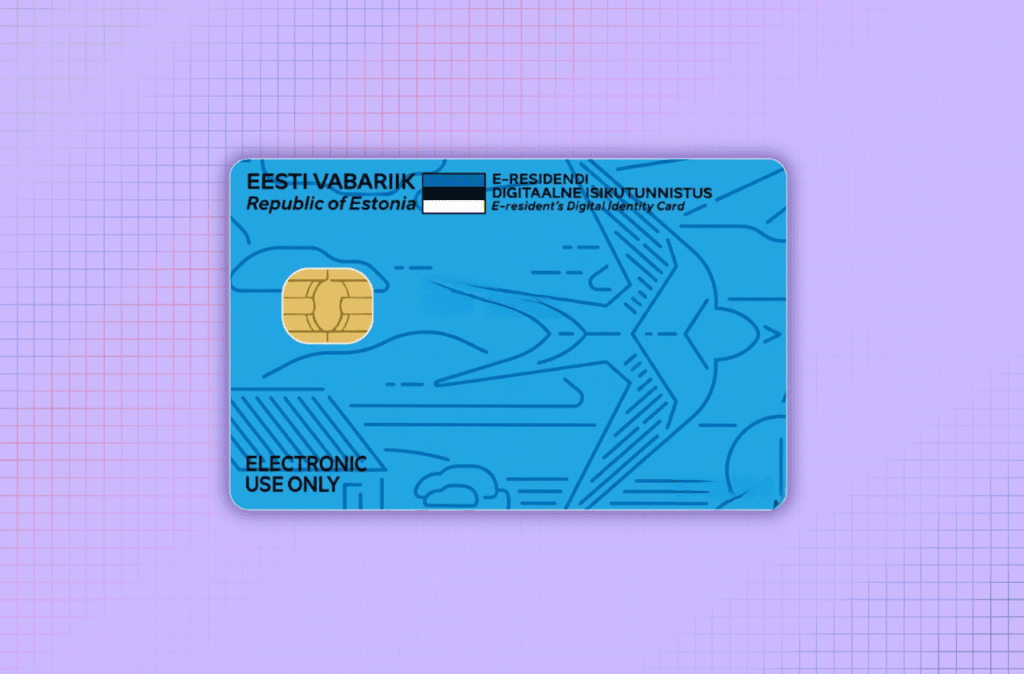
At the centre of e-Residency security is the digital ID card issued by the Estonian government.
The card is eIDAS-compliant across the European Union and allows e-residents to create Qualified Electronic Signatures. These signatures are legally equivalent to handwritten signatures under EU law and meet the highest trust level defined by regulation.
For founders, this enables legally binding actions such as signing shareholder resolutions, contracts, powers of attorney, and official filings entirely online. The signature includes cryptographic protection and a trusted timestamp, ensuring the document has not been altered since it was signed.
This level of legal certainty is one of the key reasons e-Residency works for cross-border business.
What e-Residency does not replace
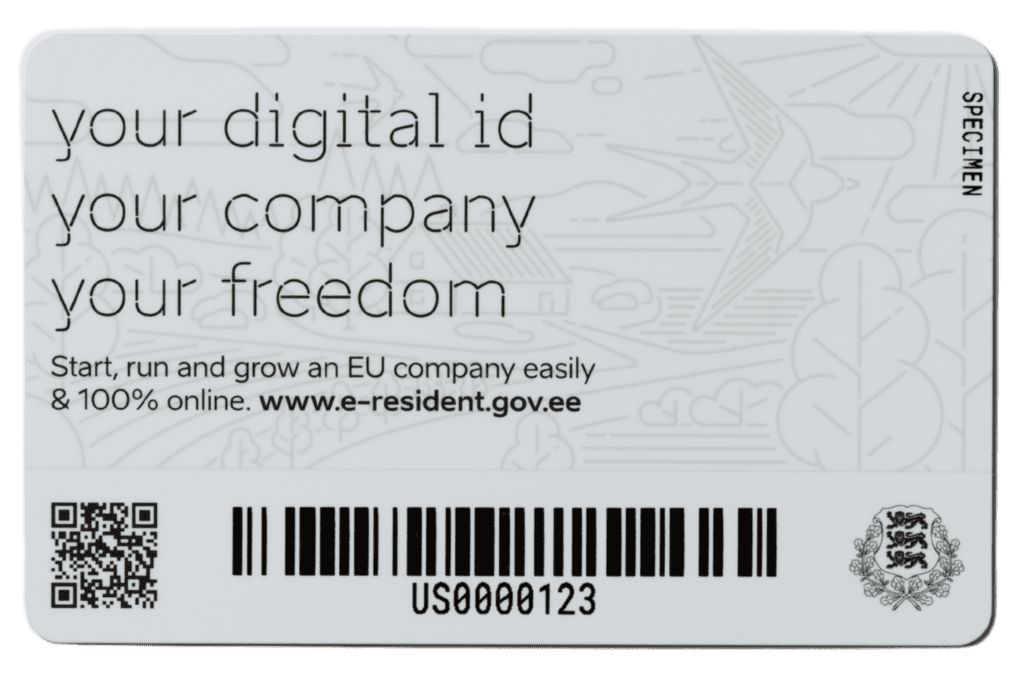
The e-Residency digital ID is not a travel document, residence permit, or tax residency status. It does not automatically provide banking services, and it does not remove the need for proper accounting or compliance.
Most problems e-residents face are not caused by technical failures but by operational issues. Missed filings, expired digital IDs, incorrect company data, or unmonitored official notifications create risk even in a secure digital environment.
Continuity through the data embassy concept
To protect against extreme scenarios, Estonia operates a system known as the Data Embassy. Critical state data is backed up in secure servers outside Estonia under full state control.
This ensures that essential services such as the Business Register, digital identity systems, and tax portals remain operational even in the event of large-scale disruptions. For e-residents, this provides continuity and long-term reliability.
What this means for e-Residents in practice
Estonian e-Residency is secure because it combines technology, law, and accountability. But security only works when the company itself is properly administered.
Keeping company data accurate, meeting reporting obligations, monitoring deadlines, and responding to official communications are all part of maintaining a secure business presence. The system protects data, but founders remain responsible for how it is used.
A secure digital state is powerful, but it works best when combined with professional support and clear processes. Open your company with Unicount.
Trust built on design and discipline
Estonian e-Residency is not secure because it promises simplicity. It is secure because it was designed for accountability, traceability, and legal certainty from the beginning. For founders who understand how the system works and manage their companies responsibly, it offers one of the safest environments in the world for running a business remotely.